
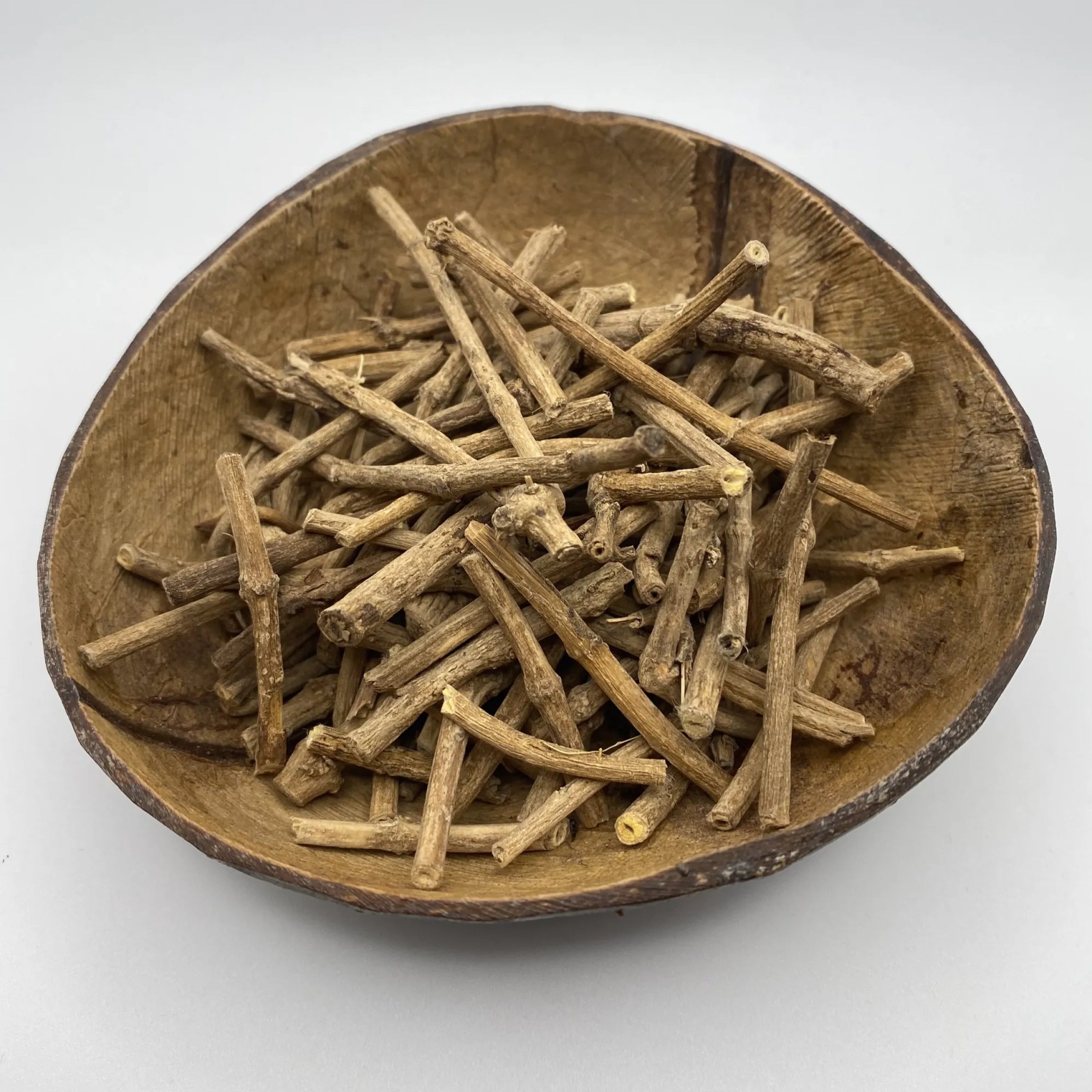
Silene capensis, known as African dream root, has a reputation that is bigger than its modest white flowers. Behind that reputation is a rich and deeply respected tradition among the Xhosa people of South Africa’s Eastern Cape. This guide tells that story as the published sources tell it, and explains how to approach the plant with respect.
What is Silene capensis?
Silene capensis is a perennial herb in the pink or carnation family (Caryophyllaceae). It has long, hairy stems and white flowers that open in the evening, release a sweet scent, and are pollinated by moths. In the wild it grows on grassy slopes and riverbanks after good rain. Some botanists group it under the name Silene undulata, and you may see either name in the literature. Its common names include African dream root, dream root, and the Xhosa name undlela zimhlophe, which means “white paths” or “white ways.”
A plant of the Xhosa diviner tradition
The most detailed account comes from the anthropologist Mike Hirst, who studied with Xhosa diviners (amagqirha) in the Eastern Cape. In his writing, the root of undlela zimhlophe is one of a group of plants called ubulawu, roots that make a white foam when whisked in water. Those that grow near streams and rivers are linked to the “River People,” a respectful term for the ancestors.
According to Hirst and to the South African National Biodiversity Institute, the root is ground and churned in cold water with a forked stick until a thick white foam forms. That foam, called isilawu, is used in the initiation of diviners and in certain rituals. Novices have described taking it at specific times, often around the full moon, as part of a period of training in which dreams are considered meaningful and are discussed with a teacher. The color white is important in this tradition, connected with the ancestors and with the space between worlds.
The same sources describe other uses within the tradition, including a ritual wash, an emetic taken before ceremonies, and a role in the umbuyiso ritual that brings a deceased family member’s spirit home. Some diviners also chew a small piece of root and spit it on the doorstep. We mention the emetic because it is a good reminder that traditional preparations can be strong, and are not something to take lightly.
Respect for a living tradition
It is important to remember that this is not a historical curiosity. It is a current, living practice that belongs to a particular community, and Hirst notes that the plant is considered a gift from the ancestors. Hirst and other writers note that, in this context, the root is picked and used by diviners who were initiated at the river, and that it is not part of the ordinary herbalist’s stock.
When we write about Silene capensis, we try to do so as outsiders who are fascinated by the culture, not as authorities on it. If you are interested in the plant, we encourage you to read the original accounts, listed below, and to be careful not to repeat claims that the sources do not make.
What science says
Very little. Researchers have noted that Silene capensis is not widely known outside southern Africa and has been little studied in the laboratory. A review of divination plants in southern Africa lists the root as a component of ubulawu preparations, and that is about as far as the published record goes. We would be wary of any website that claims a precise effect or dose.
What people say about it
Online, you will find a wide range of stories. Many people say they enjoy the ritual of preparing the root, a process that gives the plant a sense of ceremony. Others say the foam is an acquired taste, or that they notice nothing special. Some simply like to keep a dream journal and see what turns up. We cannot promise that any particular experience will happen, and we would be skeptical of anyone who does.
Practical notes for curious readers
Because the Xhosa tradition is specific and the root can upset the stomach, we do not give dosing guidance. If you choose to explore the plant, start with a small amount, never mix it with alcohol or other substances, and talk with a healthcare provider first. Our Silene Capensis listing describes the form we offer and where it comes from.
Where to go next
For more plants with a traditional link to dreams, browse our Oneirogens page. You might also enjoy reading about the Entada rheedii seed, another southern African plant with a place in healer tradition.
A note on safety
Please read this before you try any herb: this article is for education and cultural interest only. It is not medical advice. Talk with a healthcare provider before using any new herb, especially if you take medication, have a medical condition, or are thinking about combining herbs with alcohol or other substances. Botanicals are not for people who are pregnant or nursing, and they should be kept away from children and pets. Laws on some botanicals vary by country and state, so check the rules where you live.
Keep reading
Sources
- Hirst M., Root, Dream and Myth: The Use of the Oneirogenic Plant Silene capensis Among the Xhosa of South Africa, Eleusis.
- Hirst M., Dreams and Medicines: The Perspective of Xhosa Diviners and Novices in the Eastern Cape, South Africa, Indo-Pacific Journal of Phenomenology, 2005.
- South African National Biodiversity Institute, Silene undulata, PlantZAfrica.
- Sobiecki J.F., A review of plants used in divination in southern Africa and their psychoactive effects.
These statements have not been evaluated by the Food and Drug Administration. This product is not intended to diagnose, treat, cure, or prevent any disease.