Search for “dream herbs” and you will find an overwhelming mix of folklore, marketing, and strong opinions. This beginner’s guide is meant to cut through that. We will explain what the term means, introduce the plants most often mentioned, share where each tradition comes from, and suggest some sensible ground rules for anyone curious.
What are dream herbs, or oneirogens?
“Oneirogen” is a word built from the Greek oneiros, meaning “dream,” and the suffix -gen, meaning “to produce.” In practice, “dream herbs” or “oneirogens” is a casual label for plants that have been connected, in folklore or traditional practice, with dreaming. It is a cultural category, not a scientific or medical one. Very few of these plants have been studied in a laboratory, and we make no claims about what any of them do.
What the plants share is not a chemistry but a story: in several parts of the world, healers and diviners have prepared certain plants in connection with dreams, which they treat as meaningful. Understanding that context is the best way to approach the topic.
Five plants and one blend
Here are the plants and the blend you will see most often, and where the written record says they come from.
- *Blue lotus (Nymphaea caerulea*). A water lily with a central place in ancient Egyptian art and burial customs, today most often made into tea. Read our blue lotus tea guide or visit the Blue Lotus Whole Flower page.
- *Calea zacatechichi.* A bitter Mexican shrub that the Chontal people of Oaxaca are reported to have prepared as a tea for dream divination. Our Calea guide separates the documented history from the myths, and you can see the Calea Zacatechichi listing.
- *Silene capensis.* The “white paths” root, tied to the Xhosa diviner tradition of South Africa’s Eastern Cape. See our Silene capensis guide and the Silene Capensis listing.
- *Entada rheedii.* The giant sea bean, a famous seed that crosses oceans, and part of southern African healer tradition, including among the Xhosa. The inner seed meat is traditionally eaten, brewed as a tea, or smoked. Read our Entada rheedii history and the Entada Rheedii listing.
- *Warrior’s Plume (Pedicularis densiflora*). A California wildflower with a thin written history but a loyal following, covered in this article. See the Warrior’s Plume Buds listing.
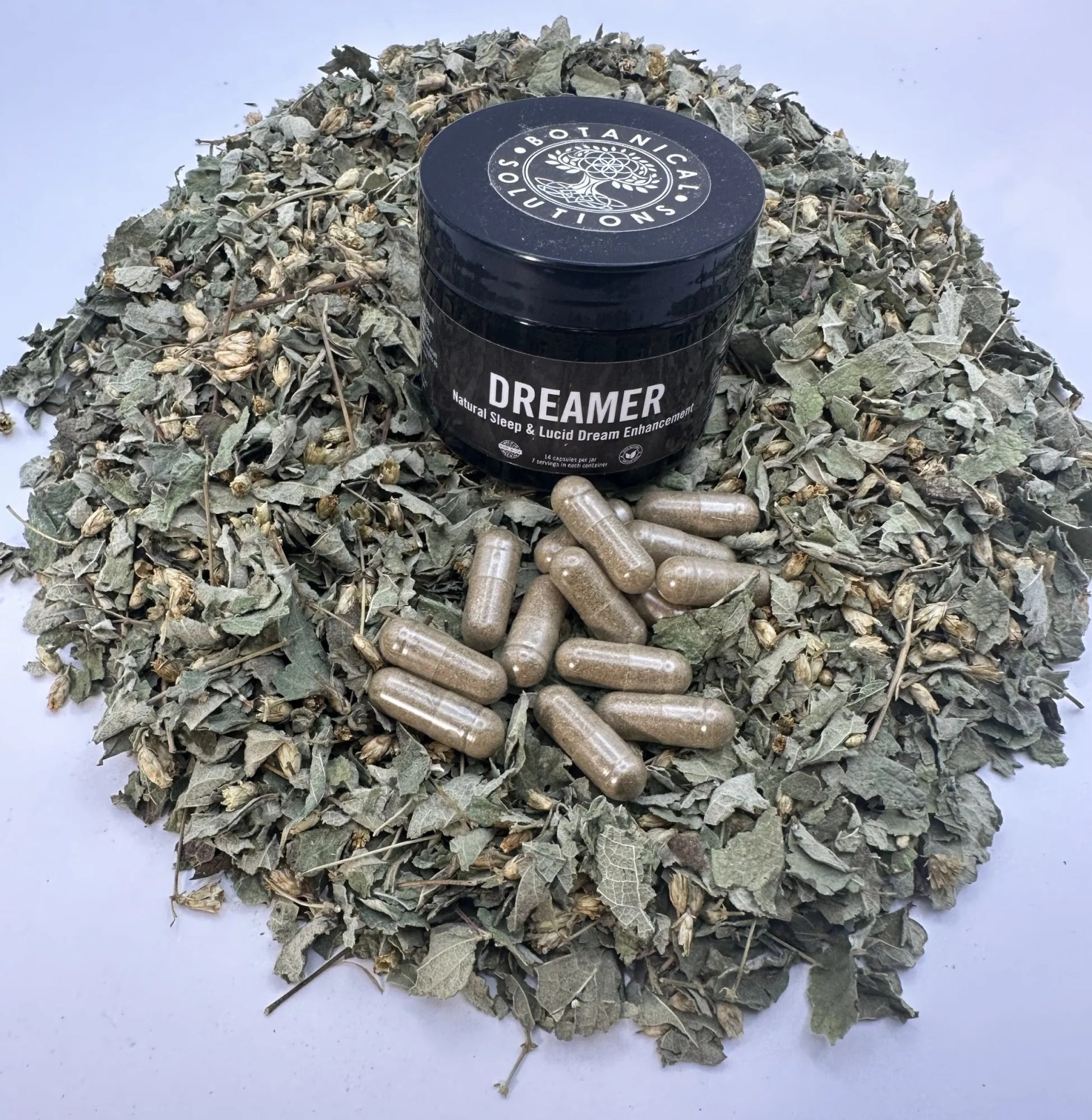
- *Dreamer.* Our own capsule blend of Calea zacatechichi and blue lotus extract, for people who prefer a ready-made format.
You can browse all of these together on our Oneirogens page.
Tradition is not a promise
One of the most important things a beginner can learn is the difference between tradition and guarantee. When a source says a community has used a plant in a certain way, that is a statement about culture. It is not a statement about what will happen to you. People respond very differently to herbs, and many people say they notice little or nothing at all. We would be wary of any seller who promises vivid dreams, or any particular result.
Respect the cultures behind the plants
Several of these plants belong to living traditions. The Xhosa diviner tradition around Silene capensis is one example, and the Chontal dream practices of Oaxaca are another. A good habit is to read the primary sources, to avoid repeating dramatic claims that cannot be traced to a published account, and to remember that some practices are sacred to the people who hold them. The source lists at the end of each article are a good place to start.
Practical ground rules for the curious
None of the following is medical advice. They are common-sense habits that many experienced herb enthusiasts mention:
- *Talk with a healthcare provider first*, especially if you take medication or have a health condition.
- *Change one thing at a time.* If you try a new herb, try only one, and keep the amount small.
- *Do not mix herbs with alcohol or other substances.*
- *Keep a notebook by the bed.* A dream journal costs nothing, works with or without any herb, and is the best way to learn what you actually notice.
- *Buy from sellers who name the species* and can tell you where it comes from.
- *Check your local laws.* Rules on some botanicals vary by country and state.
- *Keep herbs away from children and pets,* and do not use them if you are pregnant or nursing.
What people say
If you spend time in herb communities, you will hear a wide range of stories. Many people say they enjoy the ritual: brewing a cup, writing in a journal, spending a little time on themselves in the evening. Some say they love the cultural history. Others try a plant once and decide it is not for them. All of those are valid, and none of them is a prediction of your own experience.
Where to start
If you are brand new, a simple and gentle way in is to read about one plant at a time. Our blue lotus tea guide is a good first article, and it covers a flower that many people begin with. When you are ready for more, the rest of the series is waiting, and you can reach us through our contact page at any time with questions about sourcing.
A note on safety
Please read this before you try any herb: this article is for education and cultural interest only. It is not medical advice. Talk with a healthcare provider before using any new herb, especially if you take medication, have a medical condition, or are thinking about combining herbs with alcohol or other substances. Botanicals are not for people who are pregnant or nursing, and they should be kept away from children and pets. Laws on some botanicals vary by country and state, so check the rules where you live.
Sources
- Mata R. et al., Calea ternifolia Kunth, the Mexican “dream herb”, a concise review, Canadian Journal of Botany, 2022.
- Hirst M., Dreams and Medicines: The Perspective of Xhosa Diviners and Novices in the Eastern Cape, South Africa, 2005.
- South African National Biodiversity Institute, Entada rheedii, PlantZAfrica.
- Kandeler R. and Ullrich W.R., Symbolism of plants: examples from European-Mediterranean culture, Journal of Experimental Botany, 2009.
- BRIT, Native American Ethnobotany Database: Pedicularis densiflora.
These statements have not been evaluated by the Food and Drug Administration. This product is not intended to diagnose, treat, cure, or prevent any disease.