
If you have hiked the oak woodlands of the Sierra Nevada foothills in spring, you may have noticed spikes of deep red, feathery flowers poking up from the leaf litter. That plant is Warrior’s Plume, also called Indian Warrior, and its botanical name is Pedicularis densiflora. It is native to California, and it is a favorite of ours here in Grass Valley. This guide covers its natural history, the little that is documented about its traditional use, and how to think about wildcrafted botanicals responsibly.
What is Warrior’s Plume?
Pedicularis densiflora is a perennial wildflower in the broomrape family (Orobanchaceae), a relative of paintbrush and the other louseworts. It grows about two feet tall from underground rhizomes, with fern-like, toothed leaves and a dense spike of red to pink flowers. According to the Jepson Herbarium and the California Native Plant Society’s Calscape, it grows in pine forests, oak woodlands, foothill woodland, and chaparral, mostly in California and southern Oregon, at elevations up to about 7,000 feet. It flowers in late winter and spring.
The name is a picture. The red spikes are said to resemble the feathered headdresses worn by some Native peoples, which is how Indian Warrior and Warrior’s Plume came to be its common names. The genus name Pedicularis comes from the Latin word for “louse,” because of an old European belief that livestock grazing on louseworts picked up lice.
A plant that borrows from its neighbors
Warrior’s Plume is a hemiparasite. It makes its own food through photosynthesis, but it can also tap the roots of nearby plants with small root structures called haustoria. In California it is often found attached to manzanita, oaks, and madrone. That unusual lifestyle means it depends on a healthy community of host shrubs, which is one reason wildcrafting it responsibly matters.
Bumblebees and hummingbirds visit the flowers, and Calscape lists many native bees and several butterflies and moths among its visitors.
What the record says about traditional use
Compared with some of the plants on our blog, the written history of Warrior’s Plume is thin, and we would rather be honest about that. The earliest detailed source we know of is a 1902 survey by V.K. Chesnut, Plants Used by the Indians of Mendocino County, California. According to the Native American Ethnobotany Database, which catalogs that survey, the entry for Indian Warrior records that children sucked the sweet nectar from the flowers and that hummingbirds fed on the blossoms. That is the extent of the documented use in that source.
Some modern herbal writers, including contemporary Western herbalists, have written about Pedicularis species in the folk-herbal tradition, and it is often added to herbal tea and smoking blends. These descriptions are modern herbal opinion, not historical or clinical fact, and studies have not tested them in this species. We mention them because you will run into them online, not because we endorse them.
Other websites say Native peoples across California used Warrior’s Plume in elaborate ceremonies. We have not found a documented source that supports that, so we would encourage you to be cautious with such claims.
Wildcrafting, with respect for the plant
Because the plant is a partial parasite that depends on its hosts, the way it is harvested matters. Responsible wildcrafting generally means:
- *Harvesting only where it is abundant* and legal, never from parks or preserves that prohibit removing plants.
- *Taking only a small portion* of any one stand and leaving the rest to flower and seed.
- *Picking buds or flowers, not digging roots*, so the plant and its host connection stay intact.
- *Knowing the plant well, because Warrior’s Plume can be confused with paintbrush (Castilleja*), which also has red flowers. Warrior’s Plume has fern-like leaves and grows in woodland.
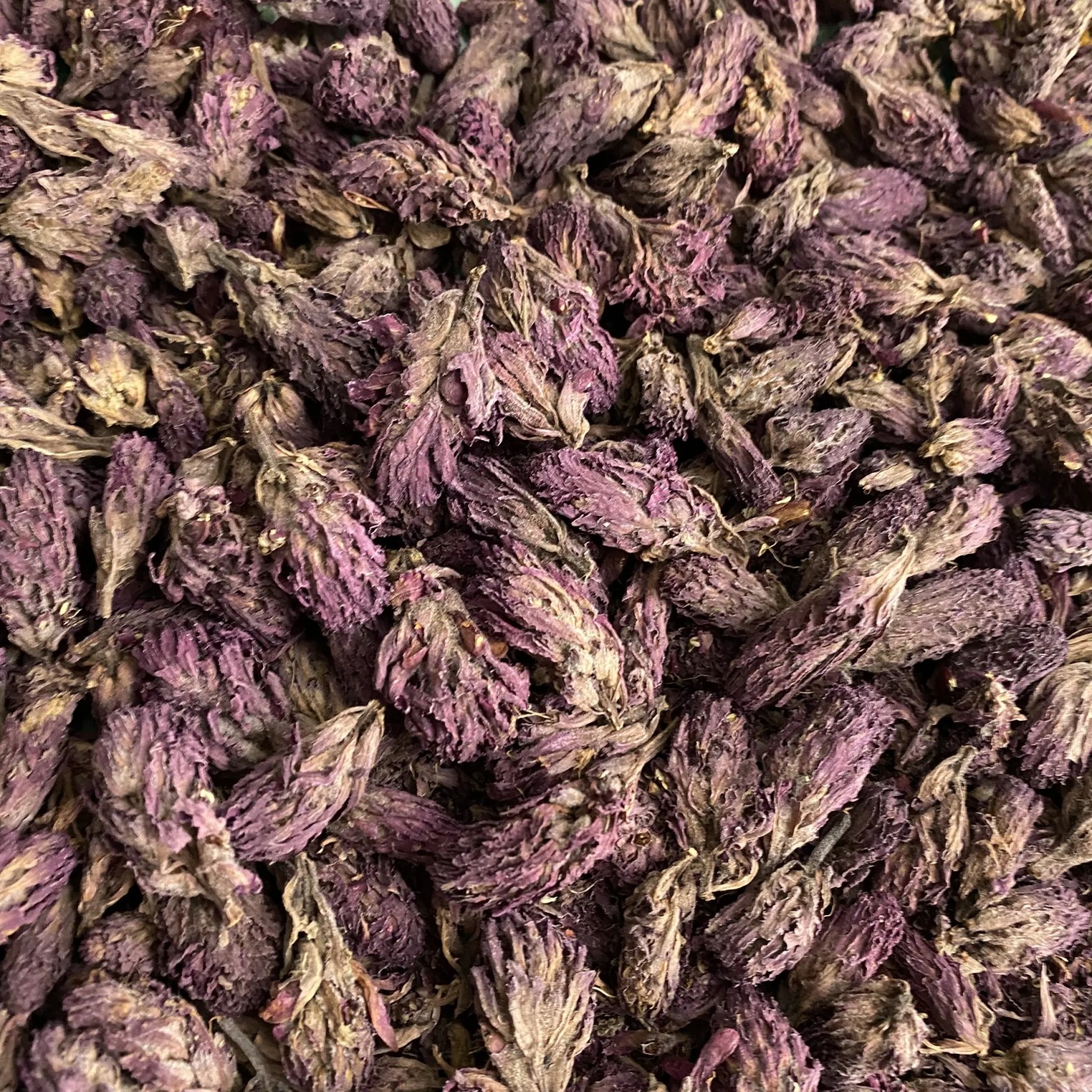
Our Warrior’s Plume Buds are wildcrafted dried flower buds from California. We are happy to answer questions about sourcing, so please reach out through our contact page.
How people use it
You will find a handful of ways that people prepare dried Warrior’s Plume. Many people brew it as a mild tea, sometimes with mint, and many people blend it with other herbs. Others use it in blends that are smoked, though we do not recommend smoking any herb. We are not making claims about effects, and the experiences people describe online vary a great deal. Many people say they simply enjoy the connection to a favorite wildflower of the foothills.
Where it fits in the dream herb story
Warrior’s Plume is not a traditional dream plant in the way that Calea or Silene capensis are, and the records we have do not tie it to dream rituals. It sits in our shop alongside them because many people exploring botanicals also like to try the plants of their own region. If you are curious about the broader category, start with our Oneirogens page or read our beginner’s guide to dream herbs.
A note on safety
Please read this before you try any herb: this article is for education and cultural interest only. It is not medical advice. Talk with a healthcare provider before using any new herb, especially if you take medication, have a medical condition, or are thinking about combining herbs with alcohol or other substances. Botanicals are not for people who are pregnant or nursing, and they should be kept away from children and pets. Laws on some botanicals vary by country and state, so check the rules where you live.
Keep reading
Sources
- Chesnut V.K., Plants Used by the Indians of Mendocino County, California, Contributions from the U.S. National Herbarium, 1902.
- BRIT, Native American Ethnobotany Database: Pedicularis densiflora.
- Jepson Herbarium, Pedicularis densiflora, Jepson eFlora.
- California Native Plant Society, Warrior’s Plume, Calscape).
- Friends of Edgewood, Warrior’s Plume (names, hemiparasitism, and identification notes).
These statements have not been evaluated by the Food and Drug Administration. This product is not intended to diagnose, treat, cure, or prevent any disease.